Celebrating colors during Navratri is a symbolic and cultural tradition that is deeply rooted in Hindu mythology and spirituality. Each night of Navratri is associated with a specific color, and the celebration of these colors holds several symbolic meanings.
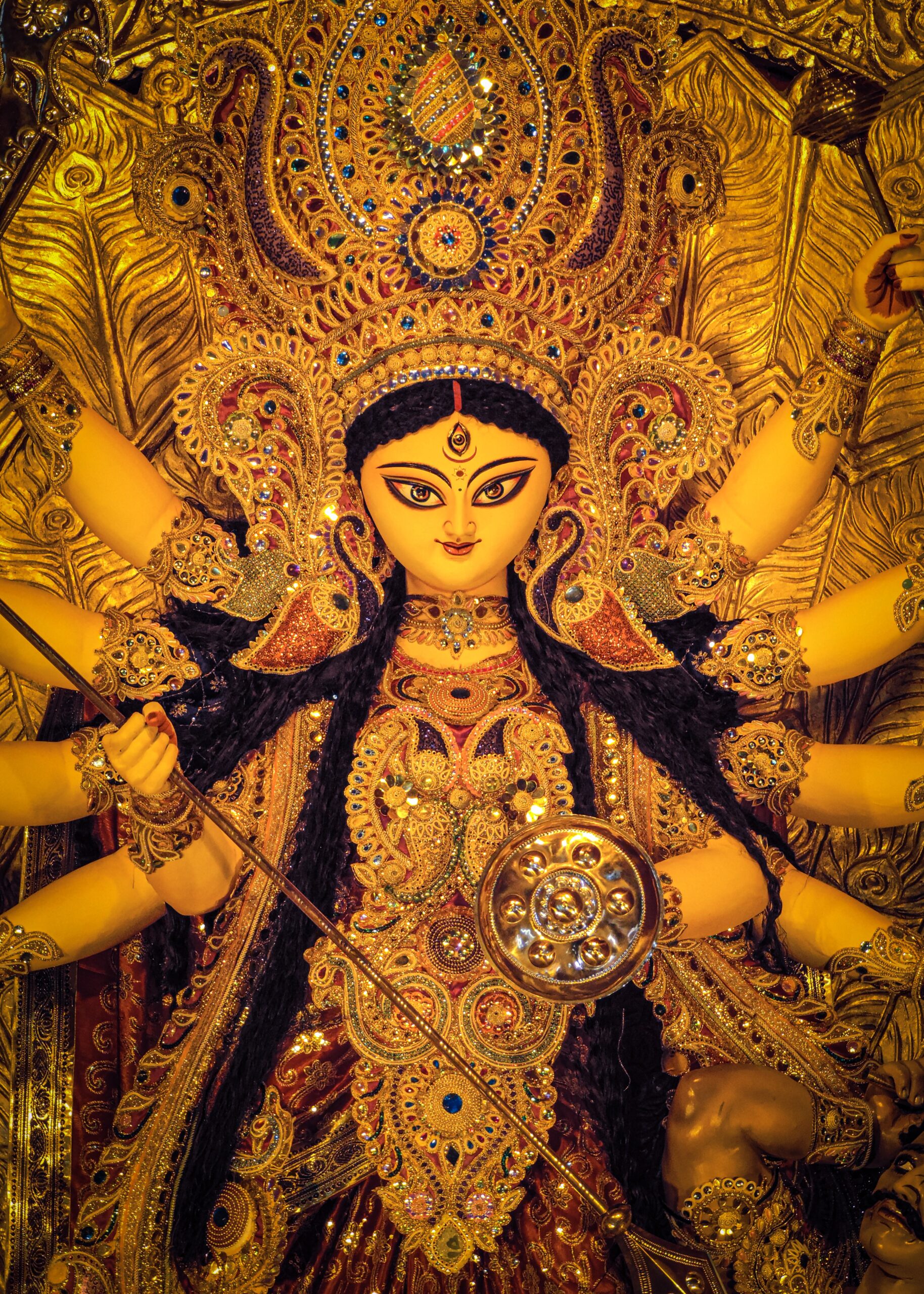
Navratri is dedicated to the worship of the goddess Durga and her various manifestations, each of which represents different aspects of her divine power.
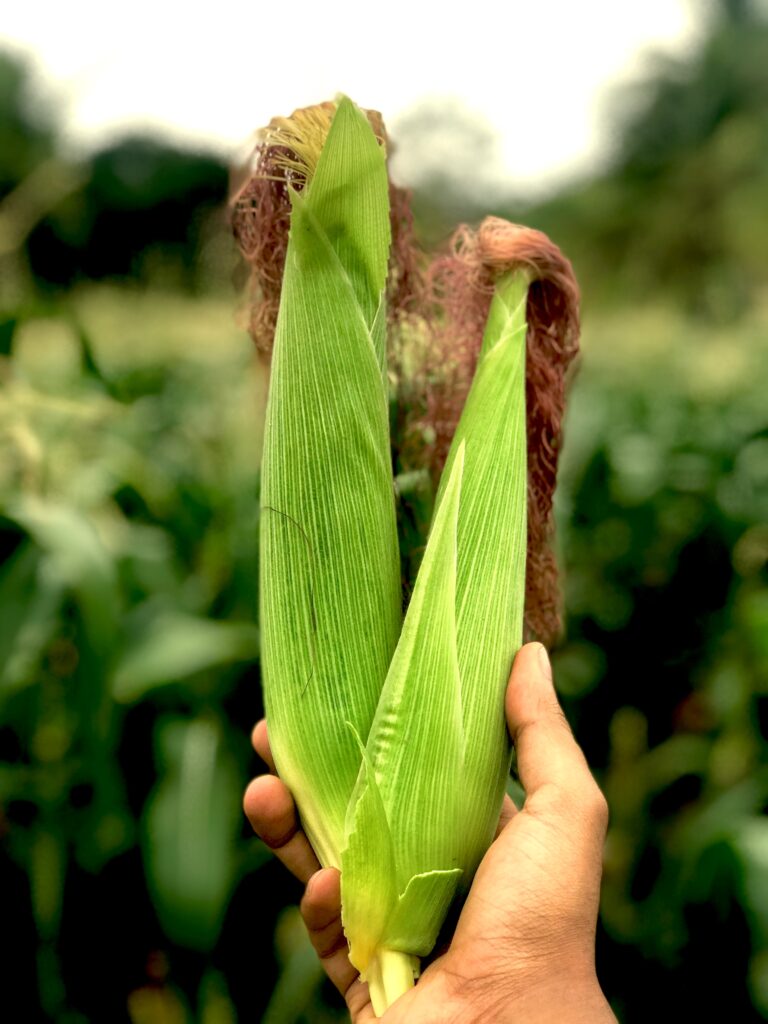
Navratri typically falls at the beginning of the autumn season in India. It is a time to give thanks for the harvest and seek blessings for a successful upcoming agricultural season. In some regions, it is also a celebration of the changing seasons.
The colors are symbolic representations of the qualities and attributes of the goddess. For example, red symbolizes strength and determination, yellow represents purity and positivity, and so on. By wearing and celebrating these colors, devotees connect with the energies and virtues associated with each form of the goddess.
In different parts of India, Navratri is celebrated with unique traditions, rituals, and cultural practices. Here are some of the regions in India where Navratri is celebrated with particular significance:
Gujarat: Navratri is one of the most vibrant and widely celebrated festivals in Gujarat. People participate in Garba and Dandiya Raas dance forms, where they dress in colorful traditional attire and dance to folk music. The entire state comes alive with music, dance, and elaborate decorations.
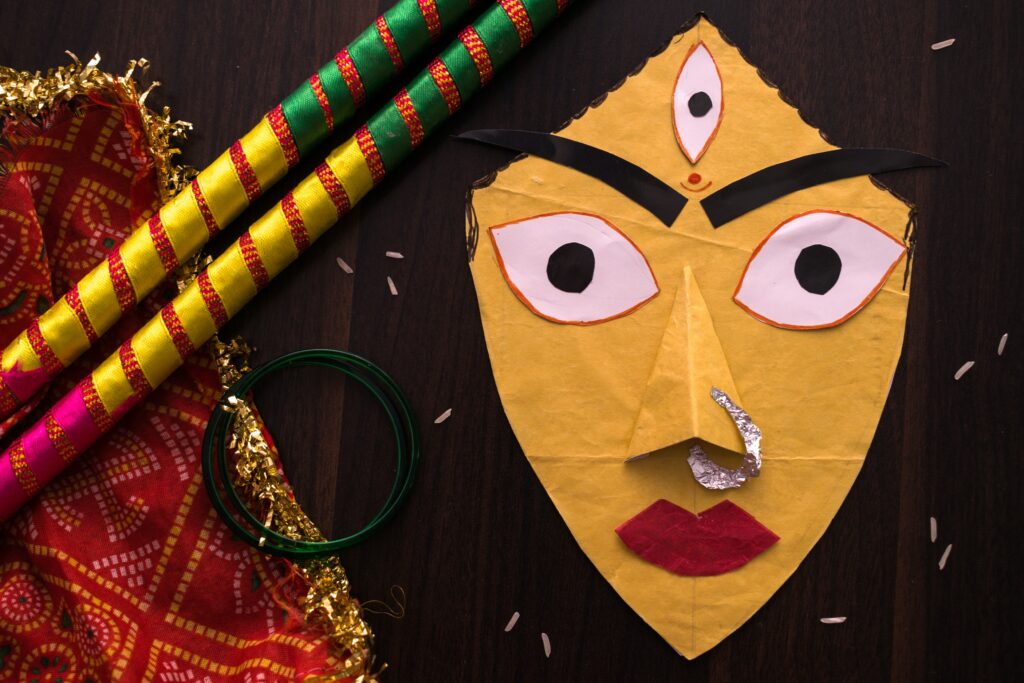
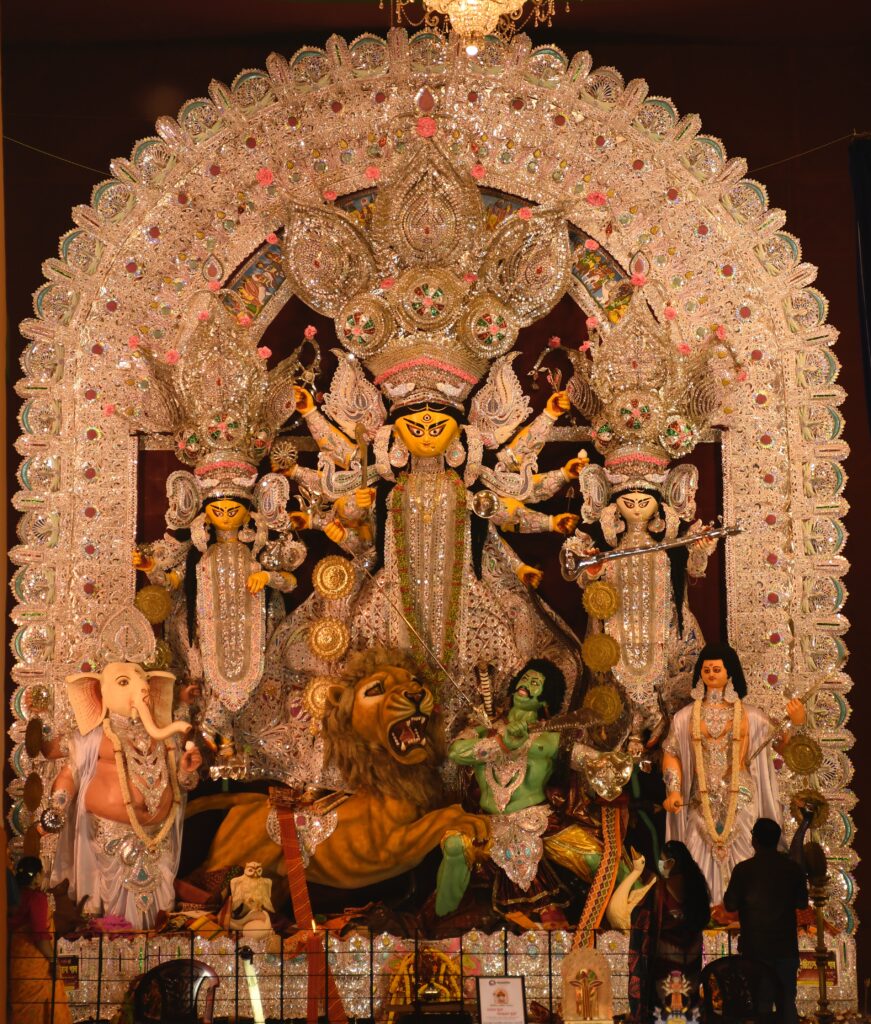
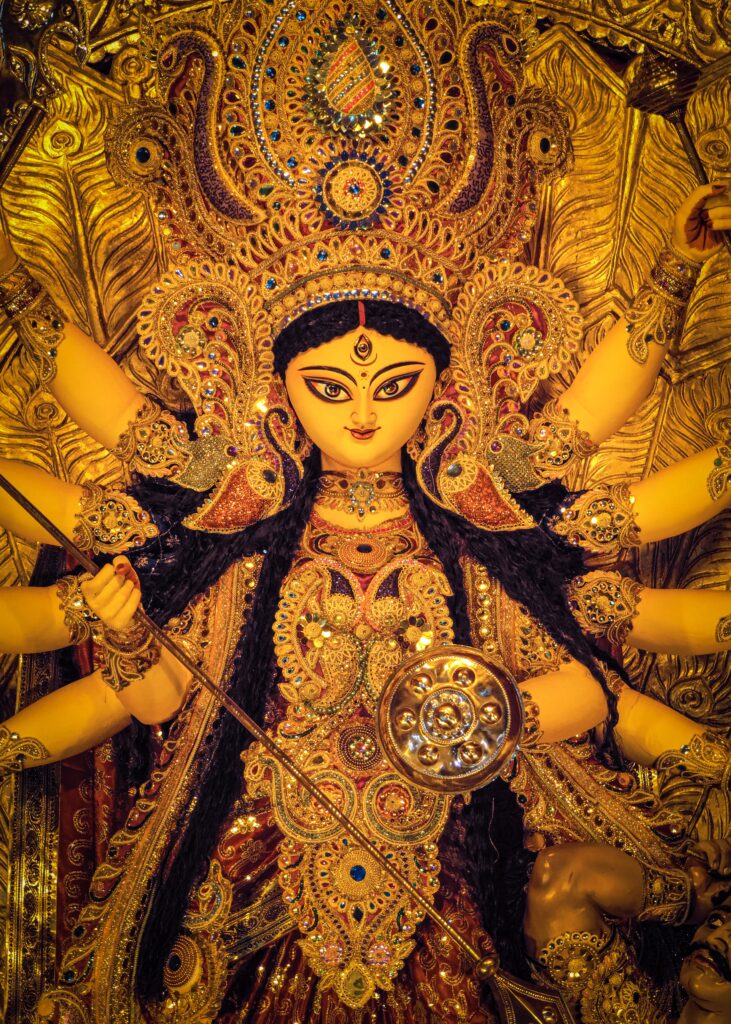
West Bengal: In West Bengal, Navratri is celebrated as Durga Puja, and it culminates in the grand celebration of Dussehra, also known as Vijayadashami. Elaborate pandals (temporary temples) are set up to worship Goddess Durga, and the festival is marked by processions, cultural events, and idol immersions.
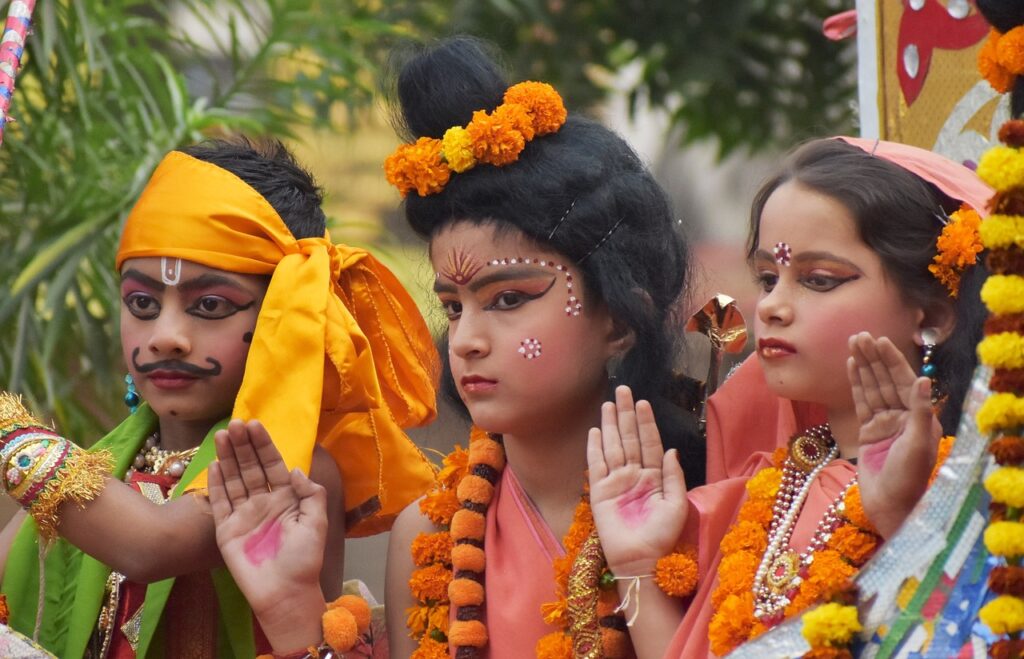
Northern India: In states like Punjab, Haryana, and Himachal Pradesh, Navratri is celebrated with devotion and fasting. In Punjab, it is common to organize Ramlila performances during this time, depicting the story of Lord Rama. People fast and visit temples to seek blessings.
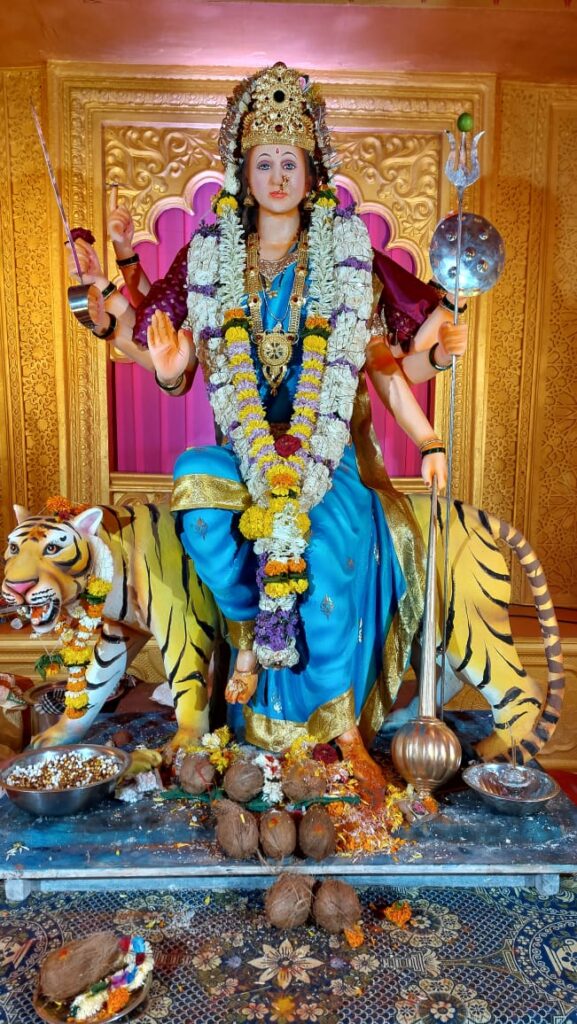
Maharashtra: In Maharashtra, Navratri is marked by the celebration of Ghatsthapana and the worship of Goddess Durga. The festival culminates with the immersion of idols on Dussehra.
Southern India: In states like Karnataka and Tamil Nadu, Navratri is celebrated with the display of dolls and figurines (Bommai Kolu or Golu). Families arrange these figurines on steps or racks in their homes and visit each other’s homes to view the displays.
East India: In states like Odisha and Bihar, Navratri is celebrated with fasting and religious rituals. In Odisha, it is known as Durga Puja, similar to the celebrations in West Bengal.
Rajasthan: Navratri is celebrated with great enthusiasm in Rajasthan. Women and girls often participate in traditional dances like Ghoomar and Gair, and the entire state is adorned with colorful decorations.
Himachal Pradesh: In the Kullu Valley, Navratri is marked by the Kullu Dussehra festival, which is famous for its colorful processions and cultural events.